Choosing between a fixed rate mortgage and an adjustable rate mortgage in 2025 is more complex than ever. As mortgage interest rate trends shift and housing markets remain unpredictable, understanding how different loan types of work is essential.
Whether you are a first-time buyer or considering a refinance, making the right decision today can impact your financial future for years to come
Let us break down the key differences, advantages, and considerations between fixed and adjustable rates, so you can confidently select the loan that fits your needs.
Did You Know?
As of the week ending April 11, 2025, adjustable-rate mortgages (ARMs) accounted for 9.6% of all mortgage applications, marking the highest share since November 2023, according to the Mortgage Bankers Association’s weekly survey.
Interest Rate Comparison: 2025 Market Outlook
Over the past two years, mortgage rates have climbed in response to inflation, Federal Reserve policies, and broader economic conditions. While there is cautious optimism that rates may stabilize, current projections for 2025 show continued fluctuations.
For many borrowers, the question is not just what rate they can get today, but how their mortgage might evolve over the next five to ten years.
This environment has led to increased interest in both fixed rate and adjustable rate options, as people weigh long-term predictability against short-term savings.
Loan Type Breakdown: Fixed vs Adjustable Rate Mortgage
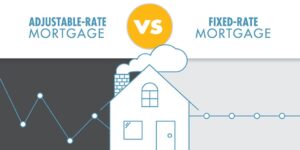
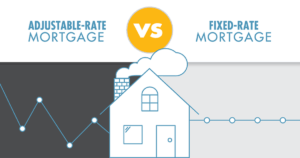
A fixed rate mortgage provides a consistent interest rate over the life of the loan. This means your monthly principal and interest payment will not change, offering peace of mind and straightforward budgeting.
An adjustable rate mortgage (ARM loan), sometimes referred to as a variable rate mortgage, begins with a fixed interest rate for a set period (often 3, 5, or 7 years) and then adjusts periodically based on market indices.
ARM loans often have lower initial rates, making them attractive in the short term, especially if you plan to sell or refinance before the rate adjusts.
Choosing between these options often comes down to how long you plan to stay in your home and your tolerance for future rate increases.
Fixed Rate Pros and Cons
A fixed rate mortgage offers several clear benefits:
- Predictable payments for the entire loan term
- Protection against future rate increases
- Ideal for long-term homeowners
However, it may also come with drawbacks:
- Higher starting interest rates than ARMs
- Less flexibility if rates drop significantly
In 2025, with mortgage rates still adjusting to post-pandemic economic shifts, many borrowers find themselves debating whether the higher cost of a fixed loan is worth the stability it offers.
5/1 ARM Explained
One of the most common types of ARM loans is the 5/1 ARM. With this loan, the interest rate is fixed for the first five years, then adjusts once per year afterward.
This structure allows borrowers to benefit from lower rates during the early years of the loan, which is especially useful for those who do not plan to stay in the home long term.
For example, if you are purchasing a starter home or expect to relocate in five to seven years, a 5/1 ARM could save you thousands in interest compared to a fixed loan.
However, it is important to understand how your payments might change once the adjustment period begins.

Rate Caps Explanation: What You Need to Know
ARM loans come with rate caps that limit how much your interest rate can increase. These caps are essential safeguards for borrowers. There are typically three types:
- Initial adjustment cap: Limits how much the rate can increase the first time it adjusts
- Periodic adjustment cap: Limits increases during subsequent adjustment periods
- Lifetime cap: Limits the total increase over the life of the loan
Understanding these caps can help you estimate the worst-case scenario for future payments.
For example, if your 5/1 ARM has a 2 percent annual cap and a 5 percent lifetime cap, your rate cannot rise more than 2 percent each year or more than 5 percent total above the original rate.
Mortgage Payment Projection: How Your Payments Could Change
Let us consider a basic residential mortgage payment projection to illustrate how these options differ. Suppose you take out a 30-year mortgage for 300,000 dollars.
- With a fixed rate of 6.5 percent, your monthly principal and interest payment would be about 1,896 dollars and remain unchanged.
- With a 5/1 ARM starting at 5.5 percent, your initial payment would be about 1,703 dollars. If rates rise after five years to 7.5 percent, your payment could increase to about 2,098 dollars.
This example shows how ARMs can offer significant short-term savings but may lead to higher costs later if interest rates climb.
Best Loan for Rising Rates in 2025
If interest rates continue to rise in 2025, locking in a fixed rate may offer peace of mind and long-term value. However, for borrowers with shorter timelines or those comfortable with some risk, ARM loans may provide initial affordability.
Ask yourself:
- How long do I plan to stay in the home?
- Can I afford higher payments in the future if rates go up?
- Am I likely to refinance or sell before the ARM adjusts?
There is no one-size-fits-all answer. The best loan for rising rates depends on your financial goals, job stability, and risk tolerance.
Conclusion
Both fixed and adjustable rate mortgages have their place in today’s housing market. A fixed rate loan may provide the security many homeowners need, especially in an environment where rates are expected to continue rising.
On the other hand, ARM loans offer lower initial costs that can be beneficial if you plan to move or refinance within a few years.
Choosing the right loan starts with understanding your unique financial situation and future plans. Our expert team at Carolina Home Mortgage is here to help you explore your options, explain the fine print, and find the loan that works for you today and tomorrow.
Frequently Asked Questions
-
What is the difference between a fixed and adjustable rate mortgage?
A fixed rate mortgage has the same interest rate for the life of the loan, while an adjustable rate mortgage (ARM) has a variable rate that changes over time.
-
What does a 5/1 ARM mean?
A 5/1 ARM offers a fixed interest rate for the first five years. After that, the rate adjusts annually based on market conditions.
-
Are adjustable rate mortgages risky in 2025?
They can be if rates rise significantly, but many ARMs have rate caps to limit how much your interest rate can increase.
-
When is a fixed rate mortgage the better option?
Fixed rates are often best for buyers planning to stay in their home long-term and who want predictable monthly payments.
-
How do rate caps protect borrowers?
Rate caps limit how much your interest rate can increase during each adjustment period and over the life of the loan.
-
Is a variable rate mortgage a good idea for short-term homeownership?
Yes, ARMs can be cost-effective if you plan to move or refinance within a few years before the rate adjusts.
-
What factors affect mortgage interest rate trends?
Rates are influenced by inflation, economic growth, and Federal Reserve policy, among other financial indicators.
-
Can I refinance my ARM into a fixed rate later?
Yes, refinancing is a common strategy if rates begin to rise and you want to lock in a fixed rate.
-
How can I predict future mortgage payments on an ARM?
Use mortgage calculators and review your loan’s rate caps to estimate how payments might change after the fixed period.
-
Who can help me choose the right loan type?
The expert team at Carolina Home Mortgage can guide you through both fixed and adjustable options to find the best fit for your financial goals.